THE PLACES ATLAS
Follow a legend
to its landscape.
Select a numbered place or use the list. Markers are approximate, illustrative and not directions.
Nine places, nine threads
Choose a place to see its Arthurian link.
Use official site information for access and opening times. A legend never gives permission to enter private land.
The atlas, in words, with sources
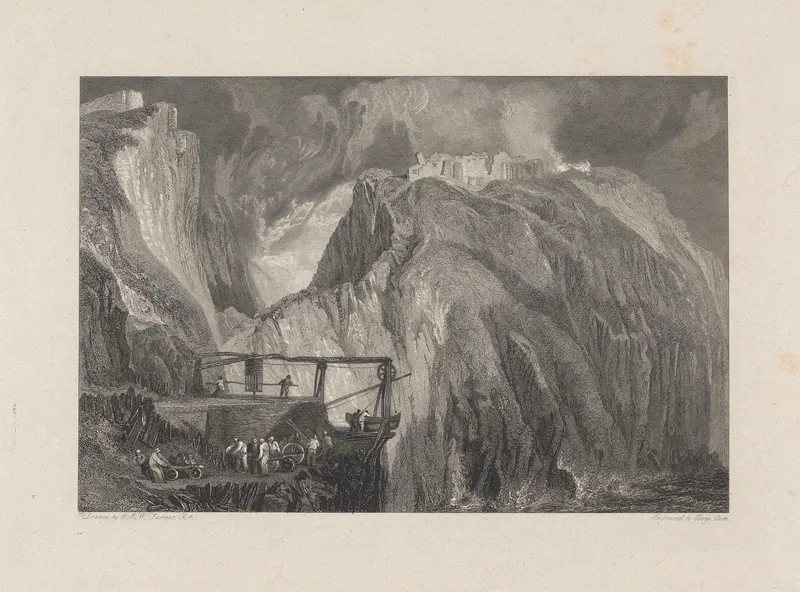
Tintagel · A castle on the cliff
History From about AD 450 until about AD 650, long before the castle, Tintagel was a busy and important place that traded with the Mediterranean world. English Heritage: History of Tintagel Castle ↗
History In about 1138 Geoffrey of Monmouth named Tintagel as the place where Arthur was conceived. English Heritage: History of Tintagel Castle ↗
Literature In Geoffrey, Tintagel stands on the sea, so strong that ‘three men shall be able to defend’ it. Geoffrey of Monmouth, History of the Kings of Britain, in Six Old English Chronicles (ed. J. A. Giles), Project Gutenberg ↗
History In May 1233 Richard, Earl of Cornwall, swapped three of his manors for the land at Tintagel. English Heritage: Richard of Cornwall and Tintagel ↗
History English Heritage says the Arthurian links may have inspired Richard to build a castle there. English Heritage: History of Tintagel Castle ↗
History In about 1480 the antiquary William Worcestre named Tintagel as Arthur’s birthplace, and the name ‘King Arthur’s Castle’ is first found in 1650. English Heritage: History of Tintagel Castle ↗
Glastonbury · A grave and an island of apples
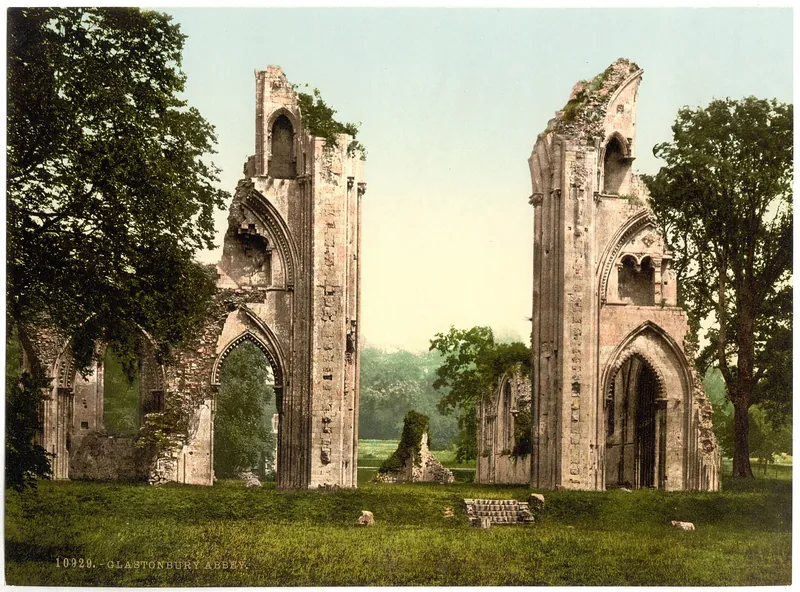
History In 1191 the monks of Glastonbury announced that they had found the grave of Arthur and Guinevere. Glastonbury Abbey: Arthur’s Tomb ↗
History The monks said they found a lead cross naming Arthur and the Isle of Avalon, which seemed to show that Glastonbury was Avalon. University of Reading, Glastonbury Abbey Archaeology: Myths ↗
History Britannica says linking Avalon with Glastonbury is just as likely to have been an attempt by the monks to use the legend for their own community’s benefit. Britannica: Avalon ↗
History Today there are no physical remains of the tomb. Glastonbury Abbey: Arthur’s Tomb ↗
South Cadbury · A hillfort called Camelot
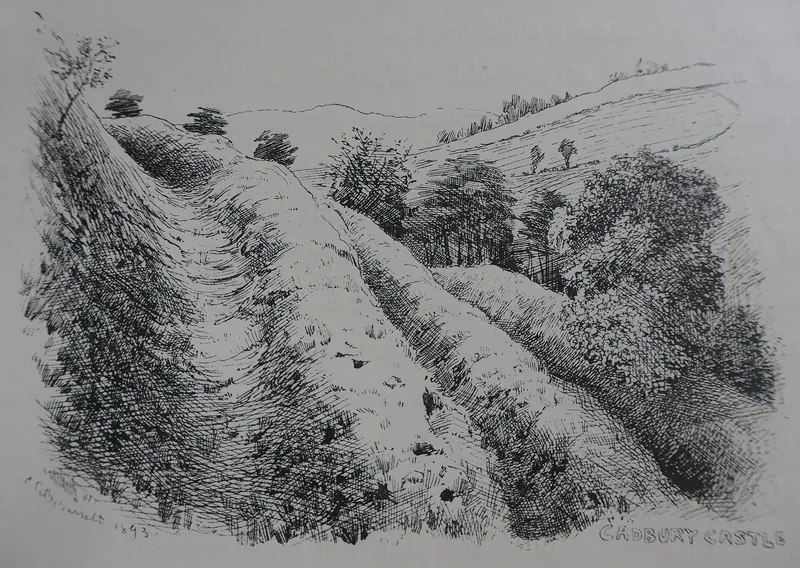
History Historic England says there is no evidence that Cadbury Castle was linked with the name Camelot before the 16th century, when the tradition was probably invented. Historic England: Cadbury Castle, list entry 1011980 ↗
History Leslie Alcock’s excavations of 1966–70 looked at about 6% of the inside of the hillfort. They showed it was in use again in the 5th and 6th centuries AD, with bowls imported from the Mediterranean and a timber building 19 m by 10 m, interpreted as an early medieval feasting hall. Historic England: Cadbury Castle, list entry 1011980 ↗
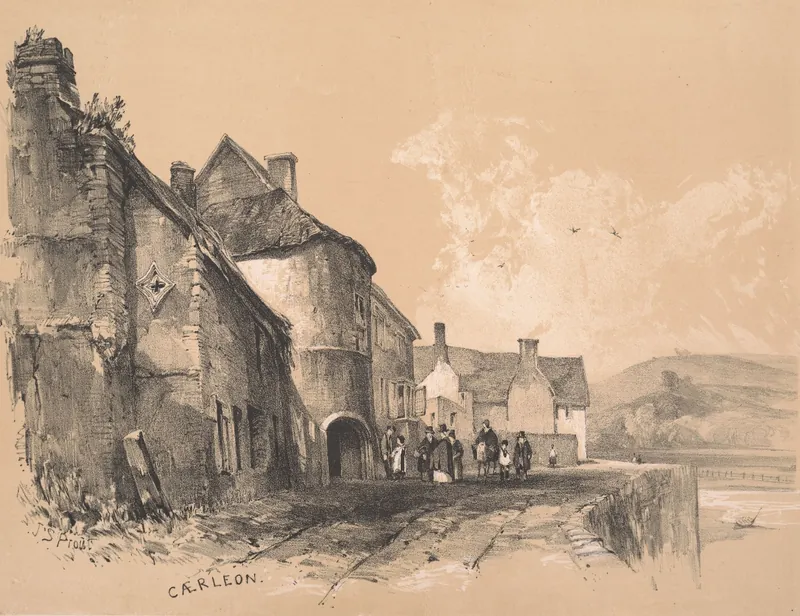
Caerleon · A Roman arena called the Round Table
History Geoffrey of Monmouth made Caerleon, in south Wales, the court of King Arthur in his History of 1136. People’s Collection Wales (Museum Wales): King Arthur’s Round Table ↗
History The ‘Round Table’ that French soldiers were shown at Caerleon in 1405 was really the Roman amphitheatre of the fortress of Isca. People’s Collection Wales (Museum Wales): King Arthur’s Round Table ↗
History Cadw says the amphitheatre was built around AD 90 and could seat up to 6,000 people. Cadw: Caerleon Roman Amphitheatre ↗
History The Round Table first appears in Wace’s French version of Geoffrey’s History, in about 1155. People’s Collection Wales (Museum Wales): King Arthur’s Round Table ↗
Winchester · A table on a wall
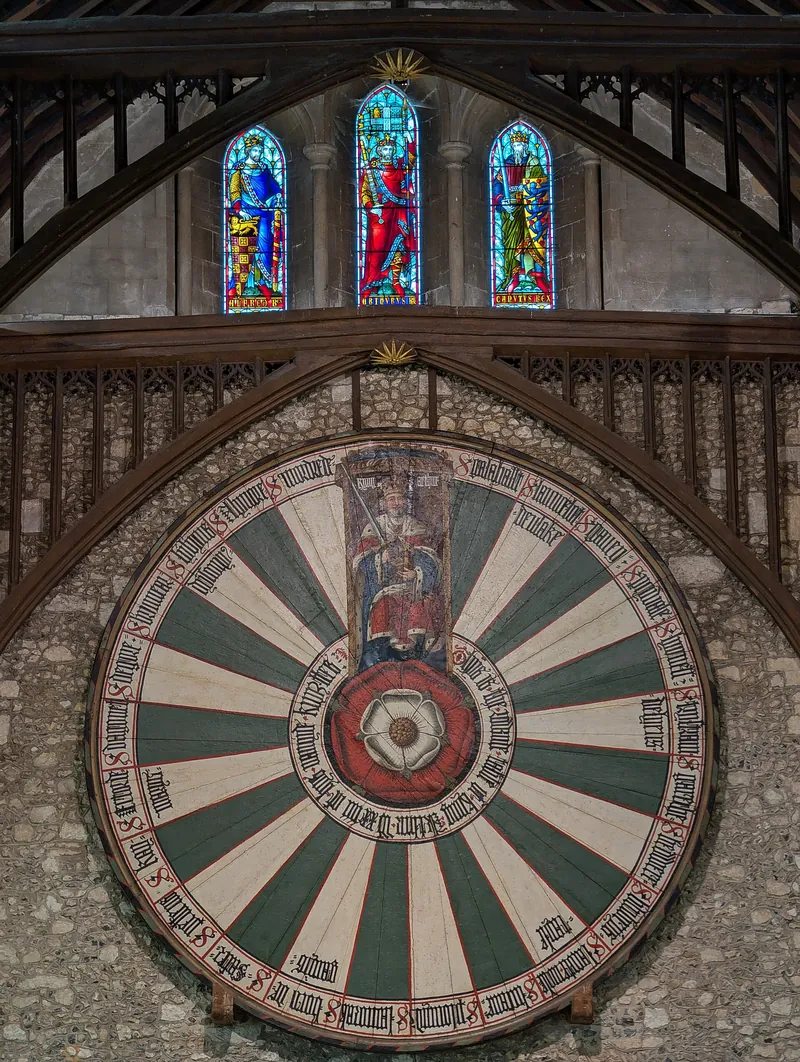
History Tests show the Winchester Round Table was built in the reign of Edward I, probably for a feast after a tournament celebrating plans for his children’s marriages. Winchester Excavations: King Arthur’s Round Table, an archaeological investigation (Biddle, 2000) ↗
History Henry VIII had it painted, using the figure of Arthur to support his own claims to power. Winchester Excavations: King Arthur’s Round Table, an archaeological investigation (Biddle, 2000) ↗
Literature Malory writes of ‘the city of Camelot, that is in English Winchester’. Sir Thomas Malory, Le Morte d’Arthur, vol. 1 (Caxton’s text), Project Gutenberg ↗
Dinas Emrys · The dragons under the hill
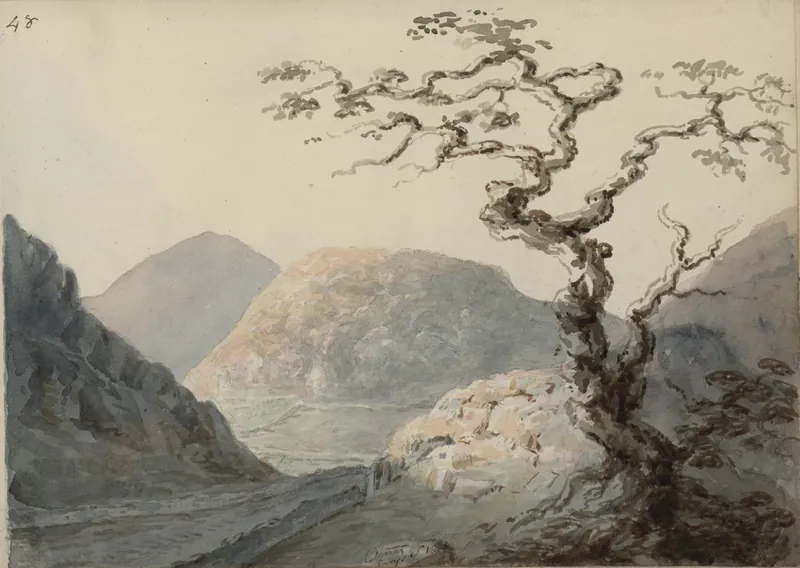
History Museum Wales lists Dinas Emrys in Snowdonia among places linked with Ambrosius, Vortigern and Merlin. Museum Wales: Who was King Arthur? ↗
Literature A note in this 19th-century translation says the place meant is supposed to be Dinas Emrys, ‘the fortress of Ambrosius’. Nennius (attrib.), Historia Brittonum (tr. J. A. Giles), Project Gutenberg ↗
Craig y Ddinas · The sleeping king
Tradition One tradition says Arthur and his knights lie sleeping in a cave below Craig y Ddinas, near Pontneddfechan in south Wales. Museum Wales: Who was King Arthur? ↗
Read the linked notebook ↗Bamburgh · Joyous Gard?
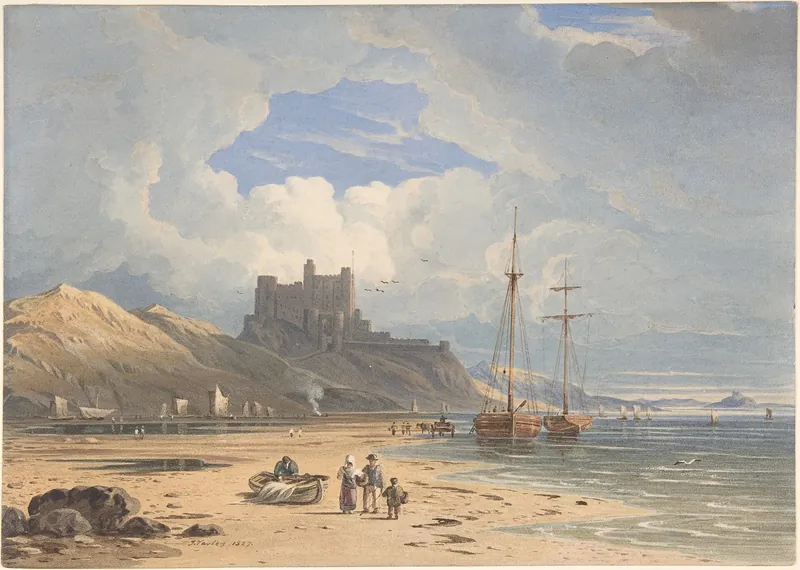
Literature Even Malory was unsure where Lancelot’s castle Joyous Gard was: ‘some men say it was Alnwick, and some men say it was Bamborough’. Sir Thomas Malory, Le Morte d’Arthur, vol. 2 (Caxton’s text), Project Gutenberg ↗
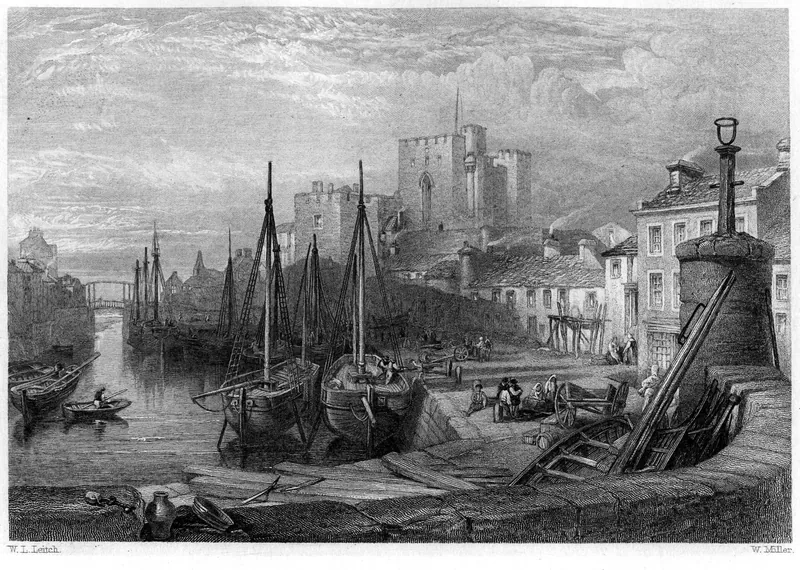
Castle Rushen, Isle of Man · Merlin and the giants
Tradition George Waldron, who was on the Isle of Man in the 1720s, recorded a belief that Castle Rushen was once held by giants until Merlin bound them with spells. A. W. Moore, The Folk-lore of the Isle of Man (1891), Project Gutenberg ↗
Tradition Another passage says the giants were not cleared out ‘till the reign of Prince Arthur, by Merlin, the famous British enchanter’. A. W. Moore, The Folk-lore of the Isle of Man (1891), Project Gutenberg ↗